Dec 02 2008

money and membership questions.

Published by hhalter at 2:21 pm under Leadership

I received an email from a pastor in Canada this week that I thought would be good to let you in on.

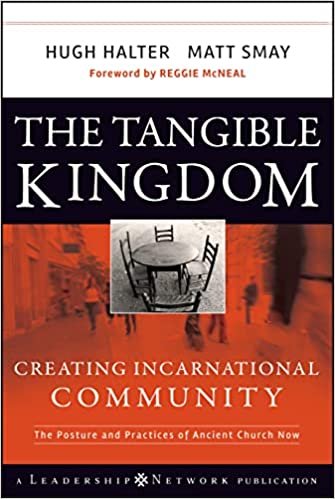
“This summer I became aware of “The Tangible Kingdom” community through Facebook. About four years ago I resigned from my established church and started a new church from scratch; no members, no money, no building. Our intent is to take a “friends first” approach to a relational-based model of creating a network of Christ communities. Until coming upon “The Tangible Kingdom,” I hadn’t found anyone exploring and experimenting in ways similar to what we’re pursuing. I’ve read a bit about “missional” and “incarnational” but often these terms come across to me as buzz words.

I am currently reading “The Tangible Kingdom” for the fourth time and I appreciate how your story articulates much of what we’re experiencing in our faith community. However, I’d like to learn more about how you promote financial expectations and giving in your faith networks. On page 174 you talk about “sacrificial giving.” Could you give me more detail of what that looks like in your community; in what tangible ways do you teach on and communicate an expectation for sacrificial giving of finances? Likewise we embrace a community of belonging where folks may ultimately believe. We enjoy some wonderful friendships and conversation circles. Yet any group of people needs some measure of structure. I’m not thinking in the strictest sense that I’m used to in pastoring previous churches, but how has Adullam worked through the issue of membership? Thanks for giving my questions your time and consideration. Larry

Hey Larry, let me address $ and membership separately and then pull them together.  As for money, Adullam has never taken offerings per se in our church gatherings, but we talk about money all the time.  I usually don’t address it in our main gatherings as people have come to trust that time to bring friends and we’ve tried to architect an environment that minimizes their expectations that church is about exploiting people for cash. But we address it on these three fronts.

First, when people come to the “Welcome to Adullam” talk that I refer to in the book, I always make a comment about how we do money. I explain how Adullam doesn’t have any full time staff or huge building expenses so we can operate pretty lean, but I encourage them to be counter-culture with us.  The greatest way to be counter-culture is to give sacrificially. I explain that I believe in the concept of a tithe and that from what I can gain from scripture and the words of Jesus, the tithe is God’s way of taking care of the world.  So I say, “I want every adullamite to work themselves toward tithing, but it’s like every other part of your faith walk and it comes in time.”   I then explain about the silent box that exists in our main gathering and ask them to be with us in giving.  At the same time, I also let them know that all their giving doesn’t have to go the general fund of adullam.  I suggest that they find ways to give spontaneously within the needs of their community or in their city or to initiatives they love in the world.

The second place it comes up is in a three week “soulace” experience that we do twice a year.  This is essentially our “membership” process where we talk about how discipleship happens in Adullam.  Too much to share here, but the just of it is to talk about “Observance, Participation, & Partnership” as the three phases people usually move through. Observance is a time we give people to just be with us without any expectations or constraints, participation is when they begin to take small initiatives toward the adullam way in participating relationally, in our communities, and in giving.  Partnership is where we suggest they come and die with us in and take ownership over Adullam with us. Here we call people to sacrificial giving instead of recreational that usually exists in the participation level.  At the end of the three weeks, we ask them to let us know where they feel they’re at. We offer financial counsel if they need it to get out of debt, etc.  The ones that say, “I’m ready to Partner,” get there names on a list for our private use and we consider that our membership idea.  We’ve found that doing more than that only sets up an unhealthy expectation between the leaders and the congregation.  I know many friends that have had good success with other membership processes, so I wouldn’t say ours is the best, but we started with a really jaded group and the Christians that now come are even more jaded and untrusting with their giving, so soulace gives us a way to let them know that we want to see there spiritual movement into partnership without the feel of membership.

Third, during our village training, we reiterate that we want each community to have the freedom to respond in sacrificial giving to needs that come up each month in their spheres of relationships. I remind them that we believe in giving but give them freedom not to just give to the main adullam. We hear many stories of generous giving toward their friends.

Where this has left us is “just enough” to keep the main ship afloat. We have about $10,000 a month that comes into the general fund giving and that covers basic operating expenses, rent, part-time staff stipends, food costs, and larger giving initiatives.

All our leaders have to get their income from other sources but we do receive small amounts that make it easier to survive.

My suggestion is that you don’t tie giving directly into membership.  Call everyone to giving as a counter-culture expression of their own discipleship and create a pathway where people can take greater ownership over the larger church needs.  Membership, or “partnership” should be as much or more about their relational buy-in to create incarnational community. I also speak privately to people about where their trust is at in regards to money.  This generally leads to  a dialogue about their trust in Adullam and whether or not they want to give to the larger vision.

As for pastoral survival, I don’t think there’s anything wrong with a pastor making income from his service, but usually as incarnational church plants begin, it doesn’t take money to engage culture or form community. The time and money needs usually come up as the community begins to gather and grow, so find ways to make income outside as long as you can and then limp towards some sustainability later. Matt and I began by reimbursing our food expenses for all the parties, etc.  Then we covered cell phone bills, then medical insurance and now we do receive a small salary stipend.  Keeping as much of our income in expense reimbursement did help us maintain credibility with our folks and it took us about three years before people knew we were receiving some income.

It’s still hard to make ends meet, but God has been gracious to us and our community in this pattern of building respect and putting the focus on discipleship.  If I was outside the church, I still don’t think I’d trust a church to do the right thing with money, so if I feel that way, I give people some time to re-establish their trust in organized giving.

Hope that helps

3 responses so far

3 Responses to “money and membership questions.”

  1. Larry Krohon 02 Dec 2008 at 4:31 pm

    This is an excellent and very helpful response to my questions Hugh! I love your perspective and approach to financial giving; I can do that. I do wonder about the re-imbursement thing. Essentially our family re-imburses upwards of 90% of our tribe’s expenses. We’ve been intentional about keeping that secret as to not come across like we’re bragging. The people see where all the money is being spent and each individual should be able to figure out, “Hmm, I don’t give this community any money and I know they don’t have outside funding so I wonder where the money is coming from?” We practice sacrificial giving but we’ve been pretty quiet about drawing attention to ourselves. Perhaps I’m reading this wrong but it sounds to me like Adullam knows about the kind of dollars that you and Matt re-imburse the tribe. How do you communicate that? How do you communicate the financial story of the community as well? Do you have some kind of Annual General Meeting and present a proposed budget etc?

    As a newish church start I’ve been wrestling over how to address membership. I’m big on partnerships. I’ve just presented a partnership philosophy and practices to our small denomination as a means through which every one of our churches can at some level partner in planting. I’ve been thinking along similar lines in a localized context for our Christ-community. I wasn’t sure how to address those who essentially just hang with us and those who participate in a small degree. As for partners; well apart from my wife and twenty-something son, daughter and her boyfriend we don’t have anyone at the partnership level yet. Your “Observance, Participation & Partnership” phases are excellent. They’re a huge help in priming my thoughts for our own community.

    Thanks for being a great blessing!

    Larry

  2. [...] Hugh Halter » money and membership questions. Hugh talks about how Adalum speaks about these separate but related topics. References to the excellent book The Tangible Kingdom. [...]

  3. jason c dukeson 08 Dec 2008 at 2:46 pm

    great word guys. very thoughtful and thorough and true to being the church together.

    Hugh – a guy named Shiloh Lehman introduced your blog to me. I would love to connect some time. We are in the Orlando Metro area.

    Let me know if you ever have time to iChat or at least email together.

Trackback URI | Comments RSS

Leave a Reply