

May 27 2009

Tangible Kingdom in Toronto

Published by hhalter under Uncategorized

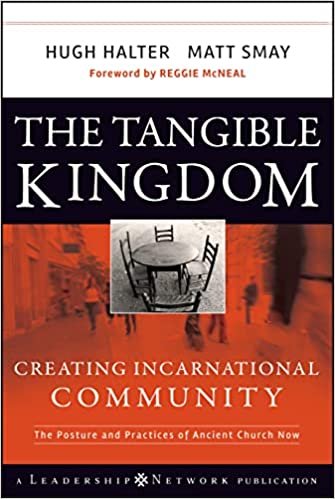
Hi Friends, since I can’t figure out how to flicker or twitter or whatever that is, I thought I’d throw out a quick vibe to let you know that I’ll be in Toronto this Thursday for a full day training sponsored by Forge Canada. If you have any friends that want to process incarnational church themes, pass the word along. Google Forge Canada for info.  Hope to see some of you or your friends.

Hugh

No responses yet

Apr 24 2009

Tangible Kingdom Primer

Published by hhalter under Uncategorized

Hi friends, sorry for the gap in coverage lately. Matt and I had a good stint in Scotland and Ireland the last few weeks.  We enjoyed a great time with church leaders and even a little golf at St. Andrews.  It’s still quite amazing to be in contexts where less than 1% of the population is in church.  We had better take our call to incarnational life and leadership much more serious if we are going to avoid going where they’ve gone.  Arrogance and or blindness should be the only reason to shirk off the call for change in the church.

On a positive note, everywhere we went, we talked about the need to create resources for those in the existing church to reorient people back to the missional way of God.  The problem in the past has been that we have separated the idea of spiritual formation from missional practices.  It’s time to redefine discipleship as “becoming like Jesus” and call people deep spiritual formation on the streets.

tkp_cover_only-blogMatt and I have been working to create such a resource.  I’m happy to announce that The TK Primer is now available. We’re more excited about this tool than we were about the release of the book.  Quite simply because we want every Christian to understand their way in God’s missional call.

The Primer is not a workbook.  We’ve realized that you can’t train, program, or preach people into incarnational life and community. The only way people will live like Jesus lived is if they have a heart change born of time with God and people on the streets.  In book lingo, unless people find their own Fiona’s that grab their hearts, they’ll probably settle for church attendance and personal devotional times. Prideful, fearful pastors will call this discipleship but any leader who takes Christ’s call to make disciples seriously, will never settle for this!
The Primer is a spiritual formation journal that walks someone through an 8 week process to deal with the barriers to real apprenticeship. That is Individualism, Consumerism, and Materialism.  This is an individual process, but one must do it with friends. Each week has 7 days of content and follows this format.

Day one: Exploration of the concept

Day two: Meditation of scripture on the concept

Day three: Change element: what will life have to be like to change around the concept

Day Four: Action day: baby steps into new life

Day Five: Community Day: where they process their personal journey together

Day Six: Calibration Day: Serious reorientation to the new habit

Day Seven: Sabbath Communion

The primer can be used with existing small groups to move them beyond “just a bible study” and more into incarnational commmunty or it can be used as a preparation for mission.  In adullam, we use this 8 weeks to prepare people to live the Adullam way and so it serves as a great assimilation process, re-decipleship process, membership curriculum, or small group training.

You can only find it on our Tangible Kingdom website. There, you’ll also find a basic video from yours truly to help you use the primer well.

If you’re an existing pastor and desire to use this tool to reorient your church, we’d recommend you check out the MCAP training program. The Morph Class is specifically design to give you an effective grid to work from using the Primer. You can find out about the MCAP at the Missio web site.

Take care,

hugh

3 responses so far

Apr 06 2009

Consumerism and kids

Published by hhalter under Uncategorized

A few months ago, I made a mistake and blogged about Adullam’s intentional fight against consumerism.  I let the cat out the bag that we were going to take a season (about 4-6 months) and meet only twice a month for our normal all church worship gathering. We did this for two primary reasons.  First, we looked back and realized that most of our conversion or transformation stories happened during spontaneous community time on the weekends.  As people bounced off each other, ate together, played together, helped each other, and shared conversation about God, really cool stuff happened.  Weekends in Denver are really the best time for this so we thought it would be missiologically appropriate to give God back the best time of the week.  The second reason was to help filter through Christians that had “transferred” to us.  We noticed that they were inspired by the Adullam story and Adullam way, but just came to church every week.  Consumerism was a deep concern for us and we wanted more for them.
So we made the shift about four months ago.  So what happened?  Not sure yet. I’ve heard many of our people love it, some struggle but feel the tension is good for them, and others have been honest to express that maybe Adullam isn’t for them.
Here’s an email to that affect. “Hey Hugh, to get right down to it Village stuff just doesn’t work for us.  Any sort of home group – regardless of the name - is just us being at home with kids running around, like any time at home.  For us, we need a place to go where we can participate and the kids can be taught and everyone gets a break. We are pretty worn out by the time Sunday rolls around and we enjoy a break from the rest of the week.   When Adullam stopped meeting weekly a few of us families tried to cram into our apartment a few times and it sort of fizzled after that.
Regarding the church Gathering, if we didn’t have kids I think it would be perfect for us.  It’s a spontaneous, visceral, and ‘bare-knuckle’ kind of church.  I was excited in the beginning about it, and it’s still a great group of people.  But for our kids we want something more – something long term. The way it works now, I’m not sure Adullam is sustainable for families.  I guess for us with three little kids, we need a church where there is weekly consistency and resources for kids. This is good for them and it’s good for us.    Take care.”
Because of my overdeveloped pecs, sawed-off military haircut, and some candidly tough blogs and writings about church folk, people assume I’m a heartless drill sergeant who gets his kicks off of watching soft evangelicals whimper through the pain of mission.  Actually, when I got this email, the Winter-warlock melted. I felt his pain, I admitted to him that I don’t like small groups, nor did I enjoy twelve kids running through my house, pooping on my carpet, or screaming while I tried to diatribe through Romans.  I didn’t blame him at all, and I sincerely wanted to give him a man-hug, and start doing church services for him again.
The reality of life does leave people working their backsides off during the week, struggling to find good family time, recover from all the stress, etc.  Therefore on one side of the dilemma, I believe it’s a great ministry that each church has to provide a place of spiritual solace for folks.  I really mean that.
On the other side of the argument is what happened with two of our villages that same week.  In a few hours I’m about to drive across town to help one of our communities, perform a dedication for one of their children.  We do quite a few baby dedications in our normal church services, but this village wanted to do it in their home with friends from the neighborhood, family, and some of their Adullam friends.  This village last night took all their adults out for a date together while another village watched all their kids.  Apparently, they trade off so that the adults can take a break together.  Then last night in our village, a bunch of the ladies got together to do a book club gathering at a home in our neighborhood where the homeowners have never been to church.  Apparently, the husband eventually came downstairs and they got talking about life and before they knew it, the couple was asking about Adullam and shared how ever since their wedding, thought they should try a church.  Sounds like they’ll be joining us for Easter next week.
As you can see, just this week in Adullam reflects the tension of consumerism, a churches role in trying to create pathways for people to move from fans to followers to fellow kingdom partners.  I share this story not to suggest that we’ve made the right choice to make it this hard.  Maybe we need to adjust.  I suppose if Adullam had the resources we would gladly provide a weekly service, maybe multiple times so anyone struggling to keep their heads above water could at least have a community to worship with.  But Adullam still has no full-time staff or building of our own.  Thus, our pathway of discipleship may not be able to accommodate what a larger, more resourced church may be able to do.  On the other side, maybe we’ll have a higher percentage of our people move deeper into mission because of our narrow way, and I suppose many larger churches would love the nimbility we have.  Sometimes I think it’s just a matter of helping people think outside the box.
The first emailer, may never have thought that they could actually get more solace by trading babysitting with kids, and over time, he may find that integrating kids into mission might be more fun and spiritually formative than just dropping the kids off every Sunday for the next ten years.
And this is the point of this chapter.  Every church has the same call. The main thing of making apprentices of Jesus is a non-negotiable. But each church has its own context, resources, and processes they must navigate in order to win the day over consumerism. Sometimes all it takes is helping people think outside the box. Although there’s always pain in not being able to meet everyone’s desired wants or felt needs, I think long term, we’re better to push than to pander or perform.

2 responses so far

Feb 06 2009

Missio/Forge Partnership

Published by hhalter under Uncategorized

I wanted to update you all on a great partnership that is forming between Alan Hirsch and his Australian network called FORGE and Missio.  Over the last two years, we’ve done a lot of synergized events with Alan and he’s been an incredible advocate for Missio and The Tangible Kingdom as we’ve always pointed people towards Alan’s writings and processes.  People often say, “I read Shaping of things to come/Forgotten ways, and it changed the way I think about church, but The TK  helped give a real life picture of how missional/incarnational ways of church can happen.

This constant response has moved us all to realize that the Missional/Incarnational dialogue is now becoming common place. No longer is it a fringe idea. Everyone, including multi-site/mega-church/normal church leaders are all wanting to move forward.  Thus, we’ve sensed a need to have a more unified effort to bring more people into the discussion, providing regional training options and a more comprehensive support structure to help all ends of the church spectrum.  We hope that as we join hands in this effort that many others will look to serve God’s missional movement with us.  We’ll keep you posted. As for now, I leave you with a silly picture of the masterminds (or band of knuckleheads)  of this global takeover (Hugh, Matt, Lance “shapevine” guy, and Alan)  If you look really close to the whiteboard behind us, you’ll see the secret plan to wake up the “underworld”!!!!img_0087

6 responses so far

Jan 20 2009

Nimbility

Published by hhalter under Uncategorized

Several weeks ago I loaded up a brief list of comments regarding “You know you’re an incarnational community when.”  I had one fella email me and ask me what my list would be for incarnational church.  Great question and it caused me to parouse all the “missional/attractional” charts I’ve compiled over the years.  You’ve probably seen many as well.  As I looked through some of the tags, I noticed that none of them mentioned “Nimbility.”

Quite possibly, it’s due to the fact that it’s not a word, but since other authors get to make up their own words, I thought it’s okay to give it a shot.

“Nimbility” according to Hugh, is a churches ability to hear from God and make quick adjustments or even change course without going through the normal 6-12 months rigamaroll.   Now there’s a great word “rigamaroll.”

Nimbility was a key characteristic of the non-institutional church that seemed able to hear God’s voice and simply go where God wanted them to go and do what they thought the winds of the Holy Spirit directed. Now, I’m not one of those hyppie-type Christians that believe that we just sit indian-style in the middle of a flowery field and move like a band of Grateful dead followers in a caravan of VW buses.   I’m actually quite suburban in my ways.  I like some structure; I value organization and planned forethought; I value the biblical precedent of eldership and congregational accountability, but there must be a way to avoid the drawn out process of ecclesial red tape that quite often limits a church’s ability to dance with God when he speeds up the music.

A few months ago, we were sensing that Adullam may be slipping into “churchdom.”  Our original story as chronicled in The Tangible Kingdom was full of conversion stories, spontaneously meaningful dialogue with the unchurched culture, hours spent on the weekends in transformational relationship, and all-around focus on a Monday through Monday missional Christianity.

Although our rhetoric stayed the same, the gravity of growth was pushing us into a corporate slumber.  Many of us sensed it, but we simply didn’t have the time or the energy to address it as we wanted to.  Maybe you’ve been there.

Maybe that’s a side lesson in Nimbility. Just like you lose your co0rdination after a long run or a two hour hard mountain bike ride, fatigue, both corporate and personal may be why we settle into the rut of “just doing church.”

When the voice of God was clear, I sent out an email to our entire congregation and told them that I needed them all to be at the next gathering. I referenced that we had to make some hard decisions together.  In fine form, almost everyone showed up.  I think some thought I was either shutting the church down or someone had made a massive moral blunder.

I began by calming their fears of impending doom, but told them that we had lost our story.  I reminded them of our original story together and simply asked them to consider giving God the best part of our week again.  I shared how almost all the great stories of Adullam happened on the weekends and how our Denver culture requires that God’s missional church be most active with people on Saturday and Sunday.  We needed our spontaneously intentionally time together again.

I then suggested that we hold a much more balanced rhythm of Gathering weekends and Village weekends without a corporate gathering.  After our time, we handed out response cards to get their opinions. We gave them a week to respond and then we made our decision.  Out of several hundred adult responses, we had only two people that said they preferred to have weekly gatherings.  Everyone else confirmed, God was asking us to get back up on our toes and start dancing again.

In the next four weeks, we prepared not only to change our Gathering structure but also a new location move and we actually moved our Gathering time as well.  In short, we did what you’re never supposed to do in a church. CHANGE EVERYTHING ALL AT ONCE!

So what happened? Not sure yet, but so far, everyone is smiling, we almost doubled the number of villages, I was able to have a truck load of conversation with people who felt the change was pushing them back toward God.  As well, many of our villages that had become midweek bible study groups had intentional conversations about how they were going to use their free weekends to serve in their city and neighborhoods.  In short, we recalibrated back to God’s original thumbprint for our corporate community and in six week time, it feels like the old story.

I hesitated to share this with you via blog because I didn’t want any tired pastor to throw in the towel and push their congregation like we did ours. For sure, most congregations can’t do what we did, nor would it be wise for others to try.  Adullam had as one of it’s core elements, a history of change and flux so “Nimbility” came easier for us.

I’m simply sharing this because I’m proud of us. Like a Dad who sees his family do something remarkable together, I’m glowing with admiration for a band of friends and fellow sojourners who want to hear from God together and who make His missional call the priority over personal preferences, fear of change, or calcifide organizational structures.

If I was to make my new “what does a missional church have to have” list, at the top would be NIMBILITY.

I’ll keep you posted

Hugh

5 responses so far

Dec 18 2008

What is incarnational community?

Published by hhalter under Leadership

Hi Friends, quite a few folks ask us about our definition of “an incarnational community.”  In Adullam, we make sure people know that our goal is not to pump out IC’s or to get people to do IC’s.  The goal is that every person starts to grow toward being a more holistic IC, learning to integrate Inclusive Community, Meaningful Communion with God, and Pure mission to others.  Some start off as bible studies, some start off from a point of mission, and other groups start as simply a group of friends.  No matter where they begin, we coach them to become a fully functioning IC.   Here’s just an off the top of my head list of ways you can know you’re group is maturing.  Hope it helps. Feel free to add your own to my list and maybe we’ll come up with a good grid to help others with.

You know when you’re an incarnational community when:

* You have a group of friends who know they can come over, or call your cell phone without feeling like they’re bugging you.
* You look at your weekly calendar and can find at least one or two times that you’ll be seeing several of them.
* The question, “How’s it going?” is quickly followed by, “how can I help?”
* The same people you call for a movie night are the same ones you call for prayer, and the same ones that you find yourself helping others with.
* You can’t wait for your non-Christian friends to meet “your people.”
* You are as excited to throw a party together as you are about studying through the book of Romans…but you still like studying Romans.
* You watch each other’s kids and are on call for emergencies.
* You can think of a few people you’ve had to suggest they go “play church” somewhere else.
* You can’t find all your tools cuz they’ve been loaned out to people in your community.
* You find yourself taking a hike together on Sunday morning instead of just going to church.
* You meet together as a community to help serve the larger church gathering or network you’re a part of.   (If by chance you don’t think you should be a part of a larger congregational structure, you’ll probably heading for myopic land and you’ll be out of community all-together in a few months.)
* Everyone’s sniffed each others stinky socks (metaphor for knowing each others hidden secrets) and there’s now a freedom to just be yourself.
*Extroverts get to be extroverts and introverts can remain introverts.

*Your children feel like they are a part of the community instead of getting thrown into the basement to watch veggie tales until the big people are done talking.

*When needs come up within the sphere of your friends, your people quickly pool resources or commit time to help.

*When your house or the house of your community runs the social calendar for the neighborhood.

*When you can take a month off from meeting and pick up right where you left off.

As I keep adding or updating I’ll let you know.

5 responses so far

Dec 08 2008

Why I don’t blog much

Published by hhalter under Uncategorized

I just read a good friends blog about my blog.  A great leader here in Boulder, Kevin Colon wrote this:

“Hugh moved to Denver to do a training deal for an organization and he ended up starting a church. His blogging is not incredibly frequent but when he does blog….it’s good!”

Now, while I’m humbled that a man like Kevin would even want to read my blog, I figured it was a good time to state once and for all why I only post once or twice a month.  Simply this……..”I prefer to spend my time with people.”  I’ve always wondered how people have time to read blogs, let alone write the darn things.  I only write when I’m jammed between two people on a plane, or stuck in layover at a bad airport. Other than that, I haven’t got time to be a good husband and dad let alone a good writer.  The Tangible Kingdom only got written because I committed 3 nights a week between 11:00pm and 2:00am, for five months, to do it.

So let me throw my bias out to the world, (which is only about 50 people per day).  If you have time to read more than two blogs a day, or if you’re writing and posting your own blog every day….you’re not spending enough time with people!!!!  I know some of you monastics may get a little frisky over this, but it’s just simply true, at least if you’re married and carry some burden for a local church community.  You just can’t spend your time listening to everyone else’s story if you want your own story to emerge.   People in need, empowering mentor relationships, time in the pubs with spiritually disoriented folks, great bonding with your spouse and kids, essential leadership over your own church or in your churches, etc, is where the time must be spent.

Listening to Mark Driscoll’s sermons, watching YouTube videos for hours on end, posting strange thoughts to other strange blogs, going to conferences, or pastor prayer breakfasts have to get the big chill!

If you’re in agreement, but you recognize you’ve developed an unhealthy addiction to web-based information, I suggest you give as much time to people as you give to your computer.  If you pull that off, you’re on your way to recovery!

You know some of this is tongue and cheek so don’t get too cranky with me.

Take care,

Hugh

4 responses so far

Dec 02 2008

money and membership questions.

Published by hhalter under Leadership

I received an email from a pastor in Canada this week that I thought would be good to let you in on.

“This summer I became aware of “The Tangible Kingdom” community through Facebook. About four years ago I resigned from my established church and started a new church from scratch; no members, no money, no building. Our intent is to take a “friends first” approach to a relational-based model of creating a network of Christ communities. Until coming upon “The Tangible Kingdom,” I hadn’t found anyone exploring and experimenting in ways similar to what we’re pursuing. I’ve read a bit about “missional” and “incarnational” but often these terms come across to me as buzz words.

I am currently reading “The Tangible Kingdom” for the fourth time and I appreciate how your story articulates much of what we’re experiencing in our faith community. However, I’d like to learn more about how you promote financial expectations and giving in your faith networks. On page 174 you talk about “sacrificial giving.” Could you give me more detail of what that looks like in your community; in what tangible ways do you teach on and communicate an expectation for sacrificial giving of finances? Likewise we embrace a community of belonging where folks may ultimately believe. We enjoy some wonderful friendships and conversation circles. Yet any group of people needs some measure of structure. I’m not thinking in the strictest sense that I’m used to in pastoring previous churches, but how has Adullam worked through the issue of membership? Thanks for giving my questions your time and consideration. Larry

Hey Larry, let me address $ and membership separately and then pull them together.  As for money, Adullam has never taken offerings per se in our church gatherings, but we talk about money all the time.  I usually don’t address it in our main gatherings as people have come to trust that time to bring friends and we’ve tried to architect an environment that minimizes their expectations that church is about exploiting people for cash. But we address it on these three fronts.

First, when people come to the “Welcome to Adullam” talk that I refer to in the book, I always make a comment about how we do money. I explain how Adullam doesn’t have any full time staff or huge building expenses so we can operate pretty lean, but I encourage them to be counter-culture with us.  The greatest way to be counter-culture is to give sacrificially. I explain that I believe in the concept of a tithe and that from what I can gain from scripture and the words of Jesus, the tithe is God’s way of taking care of the world.  So I say, “I want every adullamite to work themselves toward tithing, but it’s like every other part of your faith walk and it comes in time.”   I then explain about the silent box that exists in our main gathering and ask them to be with us in giving.  At the same time, I also let them know that all their giving doesn’t have to go the general fund of adullam.  I suggest that they find ways to give spontaneously within the needs of their community or in their city or to initiatives they love in the world.

The second place it comes up is in a three week “soulace” experience that we do twice a year.  This is essentially our “membership” process where we talk about how discipleship happens in Adullam.  Too much to share here, but the just of it is to talk about “Observance, Participation, & Partnership” as the three phases people usually move through. Observance is a time we give people to just be with us without any expectations or constraints, participation is when they begin to take small initiatives toward the adullam way in participating relationally, in our communities, and in giving.  Partnership is where we suggest they come and die with us in and take ownership over Adullam with us. Here we call people to sacrificial giving instead of recreational that usually exists in the participation level.  At the end of the three weeks, we ask them to let us know where they feel they’re at. We offer financial counsel if they need it to get out of debt, etc.  The ones that say, “I’m ready to Partner,” get there names on a list for our private use and we consider that our membership idea.  We’ve found that doing more than that only sets up an unhealthy expectation between the leaders and the congregation.  I know many friends that have had good success with other membership processes, so I wouldn’t say ours is the best, but we started with a really jaded group and the Christians that now come are even more jaded and untrusting with their giving, so soulace gives us a way to let them know that we want to see there spiritual movement into partnership without the feel of membership.

Third, during our village training, we reiterate that we want each community to have the freedom to respond in sacrificial giving to needs that come up each month in their spheres of relationships. I remind them that we believe in giving but give them freedom not to just give to the main adullam. We hear many stories of generous giving toward their friends.

Where this has left us is “just enough” to keep the main ship afloat. We have about $10,000 a month that comes into the general fund giving and that covers basic operating expenses, rent, part-time staff stipends, food costs, and larger giving initiatives.

All our leaders have to get their income from other sources but we do receive small amounts that make it easier to survive.

My suggestion is that you don’t tie giving directly into membership.  Call everyone to giving as a counter-culture expression of their own discipleship and create a pathway where people can take greater ownership over the larger church needs.  Membership, or “partnership” should be as much or more about their relational buy-in to create incarnational community. I also speak privately to people about where their trust is at in regards to money.  This generally leads to  a dialogue about their trust in Adullam and whether or not they want to give to the larger vision.

As for pastoral survival, I don’t think there’s anything wrong with a pastor making income from his service, but usually as incarnational church plants begin, it doesn’t take money to engage culture or form community. The time and money needs usually come up as the community begins to gather and grow, so find ways to make income outside as long as you can and then limp towards some sustainability later. Matt and I began by reimbursing our food expenses for all the parties, etc.  Then we covered cell phone bills, then medical insurance and now we do receive a small salary stipend.  Keeping as much of our income in expense reimbursement did help us maintain credibility with our folks and it took us about three years before people knew we were receiving some income.

It’s still hard to make ends meet, but God has been gracious to us and our community in this pattern of building respect and putting the focus on discipleship.  If I was outside the church, I still don’t think I’d trust a church to do the right thing with money, so if I feel that way, I give people some time to re-establish their trust in organized giving.

Hope that helps

2 responses so far

Nov 18 2008

Personal post

Published by hhalter under Leadership

Hi Friends, I don’t normally do this, but I thought I’d simply post a message I sent to our financial supporters of CRM.
Welcome to the new world!  I’m writing this just a few weeks after the national elections and while were all in the middle of the most uncertain economic times of my life.  As I try to lead Adullam, as I speak to many pastoral leaders, business people, and normal peasants, it is clear that the world as we know it must now change to fit the times.
Last week alone, I counted 13 pastors who mentioned either massive staff layoffs, or pondering for the first time, the potential of shutting their churches down, due to the inability to pay the rent.  I spoke with three of our own supporters who are on the verge of bankruptcy; and I know of 9 families within our church context who need help putting food on the table.  Even for the Halter clan, our personal support has dropped by almost half in the last three months.
As I ponder everything, you might find it strange that I am not upset or distraught about the new world.  I tend to look at everything from a point of challenge to find new ways to “get’r done” or new ways to trust God for strange provision.  Certainly, this has not caught God off guard, and if we let the scriptures guide us, we find that God often allows and even orchestrates epics of time that call people back to reality and the basics of life & God.
Within all these same contexts, our Adullam people are more vibrant spiritually, and more alert to our calling.  Many of these pastors are now looking for part time jobs which I know will help them connect with real people.  In some ways, this season may serve as another “Diaspora” pushing God’s people out of their God bubbles and easy believism, back into real life where faith must win out over nice and tidy theology of provision.
Never have I felt such focus and purpose, or seen such ministry movement, but strange it now must be accompanied by the twin brother of trial.  May our prayers truly be, “your will be done” during this time and may God’s church arise from the dust of despondency into a new day of stability and ministry to those who have no hope.

Please pray this month for:
1) Meetings with a national collegiate ministry in the Northwest, Dec. 14th
2) Prep for trainings in Dublin, Glasgow, Texas, Canada, and Florida in the next few months.
3) The stable expansion of new Missio Hubs in Los Angeles, Kelowna, Atlanta, Dallas, Austin, Virginia, & Fort Collins.
4) Revamping of the MCAP curriculum in preparation for a national roll out in April.
5) God’s leading with our second book, “The Sacrilegious Disciple” which is being shopped around this month.
6) Financial resources to come from really strange and fun places!

Thanks, and know that I am praying for you all: for wisdom, faith, creativity, simplicity and trust.

Hugh

4 responses so far

Oct 28 2008

Smackdown and Landsdowne

Published by hhalter under Leadership

Three weeks ago, I called together 12 vikings in Adullam to consider diving in at a deeper level of committment to shepherding our collective Adullam flock.  Because we have no full-time staff, we’ve run into quite a predicament helping all the rookies find a place in our mission.  Many come wanting what they read about in the TK, but fail to remember that our stories happened over a two year span and without any formal church environment.  Now, we’re playing catch up trying to figure out how to move people from observing to participating with us.

The meeting started well.  Beers were ordered, good hearted manly talk was loud, food started to roll out, and overall, it was just great to be with these men that had become dear friends.  The meeting quickly  turned colorful when a few of the dudes thought we were calling them to help the larger gathered church structures.  Most of these guys have been on staff at churches in the past, and were coming off a hard season of fighting through church deconstruction.  They all work normal jobs, struggle to pay the bills, and only come to our gatherings because their kids and wives dig it.  They usually stay outside and drink coffee while I talk, and you’d rarely see them enjoying the worship part of the service.  Yet, these guys love people. They party well and draw crowds of sojourners around them. It was a few of these mates that all of a sudden got a little edgy.

Looking back, we did say some things that opened the door, but our intentions were to draw them all back to the way we began.  INCARNATIONAL COMMUNITIES!  Despite my intent, some sharp words were shared, and in great Irish/Norsk fashion, we almost had a donnybrook ensure in the middle of an Irish pub called the Landsdowne Arms.

Proudly, I can say, there’s not a Yes-man in the crowd.  Each guy is fighting for his own heart and the integrity of our collective calling.  Tears were shed, and after a couple hours, and a few pitchers of Dublin’s finest, we realized God was up to something and what we were fighting over was worth fighting over.

I’ve often realized that we could take the easy way out.  Just call Adullam a church, put on a nice show and grow this the way many churches grow.  One problem, however, would be that most of these men would leave.  And therein lies the real issue.  Adullam isn’t about growing or not growing. Adullam is about being with the people that breath the same air I breath.  We were fighting over relationship and whether or not we could trust each other to play hard ball to keep God’s thumbprint on us pure.  They were subconsiously asking me if I was going to wimp out, and I was subconsciousy asking if they would fight for it as hard as I was.

Tonight we meet for round two. Can’t wait to be with these guys and get after it again. Church is finally fun again, it’s passionate, and scary, full of pitfalls and easy outs, but in the end, I love the challenge of staying true to Christ and true to these guys.

6 responses so far

Next »