Archive for May, 2008

May 23 2008

A strange hug

Published by hhalter under Leadership, Uncategorized

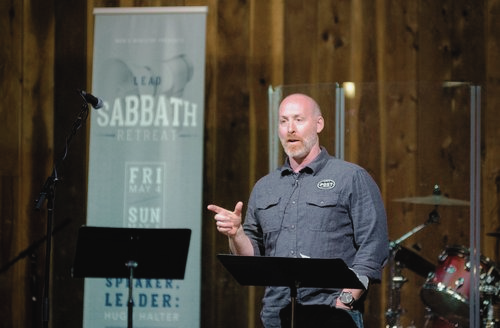
This week I spoke to a denominational leadership team for the largest denomination in the country.  Historically, this group has been pretty slow to listen to strange guys like me, especially when they know I tend to challenge the way they view and do church. However, over the last five years, I’ve seen a marked openness and humility that gives me much hope.  At the end of a three hour presentation, an older lady came up to me and gave me a very tearful and honest hug. She didn’t say anything. Just a hug and then out the door.  I knew it meant something deeper.

The next day, I spoke to their collegiate ministry team a few hours away and one of their denominational heads, said, “you know that hug you got…well, it was a big deal.”  Apparently this dear lady has been fairly skeptical of new church ideas.  She like most, fear change although they know things can’t stay the same.

Looking back, I am thankful for all the time I had with college students and their leaders, but I did fly home feeling like my connection with this woman may have signaled a more profound influence.  Giving the old guard hope instead of poking a finger of blame, sharing stories instead of challenging through philosophy, and being honest instead of belittling seems to be the key in holding both the latent church and the emerging expressions of church together.

I think we all want the same thing!   God’s Kingdom… may it come.

hugh

3 responses so far

May 11 2008

Pastoral Recovery

Published by hhalter under Adullam

Good Morning, it’s Sunday morning about 5:30 am here in Denver.  I woke up in peace and I thought it was so noteworthy, I’d tell you about it.  You see, back in the day, with our first church plant we started in Portland, waking up on Sunday morning was like getting up to fight the French Foreign Legion.  I had such a fear of speaking, preaching, leading, and holding our community together, that I would get nauseous as soon as I’d realized it was Sunday morning.  I’d usually have stayed up till 1:ooam plowing over and over on my sermon, and then back up at 4:00am out of nerves to go back over my words. I’d drive to church depressed and often it would take me 60 minutes of prayer just to fight back the fear of approaching the community.

Today, I got up and was excited.  The fact that I was even able to take my mind off today’s events shows that God is re-orienting me towards a better way.  Adullam has taught me that people don’t come to a church gathering for a sermon.  Or if they do, they’re coming for the wrong reason.  Adullamites come to connect with God and see friends.  That changes everything.  I’m not really preaching today. I’m just going to walk the community through the sermon on the mount and see how people are feeling.  I’ve been meditating on it all week and do have a few thoughts to share, but I don’t feel any need to button it together into a monologue.  Jesus just seems to be in the room and I’m learning to trust his spontaneous voice to myself and the community.   I wonder what would happen if every pastor felt like they could just read scripture and facilitate a more simple and relational approach to spiritual learning.  I’m not suggesting at all that a well thought out sermon isn’t helpful, but quite possibly adults may learn better from an approach that requires them to participate.  It may also release many leaders from the performance miseries every week.

This morning, I’ll take my daughter Alli with me.  She loves to go early and hang out with me.  I wouldn’t have had the peace of heart to do this ten years ago, but this morning I’m looking forward to donuts and Alli, and friends.

3 responses so far

May 06 2008

Reviews on The Tangible Kingdom

Published by hhalter under Uncategorized

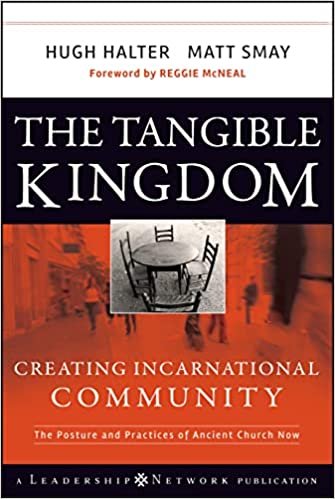
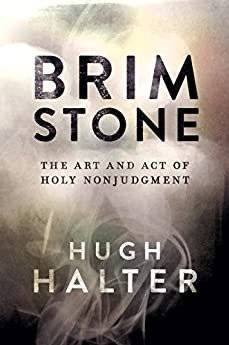
Hi Friends, thought I’d occasionally catch you up on what folks are saying about The Tangible Kingdom.  I’ve been most encouraged by all the comments thanking us for not only pushing the envelope on critical issues of missional living and “church,” but also giving honor to the existing church.  One of our greatest hopes was that this book could finally be the tool that leaders use to hold faith communities and churches together in mission. I honestly think that as just about every church is struggling to redefine and find themselves in this new landscape, The Tangible Kingdom can be a guide in not only how to move forward, but keep as many folks on the ship as possible.  One friend said, “This book finally helped my father understand what the call of mission is about without ticking him off!” This from a son of a pastor of a mega-church in Texas.  Here’s a few more thoughts on the book from other readers.  Free book offer at the end of this blog.

I just finished Tangible and found it to be a great encouragement.  I think
it represents such a fundamental shift toward what things are to be.  I
know it represents a great fit for the lifestyle I aspire to.  I found
myself very envious of the community you have found there.
I have not found anything similar here and am starting to believe that I
may not for a while, but in the mean time I have been somewhat
intentionally engaging my world of young professionals at work and school
in a way I totally would not have the freedom to do if I had all the
responsibilities implicit with a local church involvement.  I have loved
every minute of it.  Andrew Talbert

I was able to get my hands on a free copy of The Tangible Kingdom last week, which thrilled me because I was going to buy it anyway. It’s the newest book from The Leadership Network, and so far, I haven’t read a book from them that I don’t like. The Tangible Kingdom was no exception, and it is going on my “Missional Must-Read” Book list.
This book really hit me hard, partly because the story of Hugh Walter (one of the authors) mirrors so closely my own story. He was well situated in the established church, but didn’t feel quite at peace with himself, or with God, in such a position. So he left it all behind to see if he could find (or create) something that was still true to Scripture, but was also more effective in engaging and redeeming our culture. Doing so created lots of tension. Here is what he wrote, which is exactly what I am feeling:
You can’t go back, but forward doesn’t feel much better, because forward may not pay the bills or make it any easier to live the Christian life you’ve always wanted to live (p. 18).
He made it through this time of uncertainty (so there’s hope for me!) and ended up in Denver planting a community of faith called Adullam with some friends. As people wanted to learn more about what they were doing and why, they also developed a Web-based practicum for pastors and church planters to help them innovate new ways of effectively being the church.
What I found most refreshing about the book is that the authors are not trying to criticize, judge, or condemn the way the typical church functions today. Instead, they just explained what they are doing and why, and how it is effectively bringing people into the Kingdom of God. His bottom line premise is that the church is supposed to be living out the Kingdom of God in our communities and with our friends. As we do this, the aroma of the Gospel simply attracts people to us. They put it this way:
Church should be what ends up happening as a natural response to people wanting to follow us, be with us, and be like us as we are following the way of Christ (p. 30).

My friends Hugh and Matt have released a new book. The book promo explains,  In The Tangible Kingdom, authors Hugh Halter and Matt Smay help Christians and church leaders understand the Biblical concept of community as the key to evangelism, spiritual formation and enjoyment of life.
Written for those who are trying to nurture authentic faith communities and for those who have struggled to retain their faith, The Tangible Kingdom offers theological answers and real-life stories that demonstrate how the best ancient church practices can re-emerge in today’s culture, through any church of any size. The Tangible Kingdom offers new hope for church leaders, pastors, church planters, and churchgoers who are looking for practical new ways to re-orient their lives to fit God’s mission today. Hugh and Matt sent me a preview copy a few months ago and I am glad to see it out. They have been training church planters in missional incarnational approaches to church planting and I think they have much to say.  Ed Stetzer

I just received an advanced copy of “The Tangible Kingdom – Creating incarnational community” from Leadership Network by Hugh Halter and Matt Smay. I have so many other things to read, but I haven’t been able to put this one down.  Without giving away too much of the content, let me just say it’s refreshing to hear the tone with which they write.  They are honest about their wounds, they give honor to ‘traditional church’, they’re open to the various types of people and structures needed in the local church today, and heck they’re even funny.I haven’t finished it just yet, but I”m so glad they’re sharing their story with the rest of us.  Lon
The space of the church is not yet “Roman” or ecclesiastical with its hierarchies, sacramental solemnities, enclosed basilicas, and doctrinal dicta, but “ecclesial” in the original sense of ekklesia, the “calling” together of those who empowered by the Spirit and responsive to Jesus’ “sending” (the Great Commission) of the spirit-led and spirit-driven to the ends of the earth    It is the space of what Hugh Halter, with whom I have had the wonderful opportunity to meet and partner with in the past few weeks, calls “the tangible kingdom” (cf. Hugh Halter, The Tangible Kingdom, Leadership Network Publications, 2008).  The tangible kingdom is the incarnational kingdom of those who are involved in mission, whose “being” is both being-sent and being-in-relation.    Halter is not a theologian.  Nor is he an “ecclesiologian.”  He is a true Antiochene church theorist who see “churches” not as places or communities, but as relational networks.
The tangible kingdom is the ongoing and global incarnation of God in the mundus, the world.   It does not represent the secularization of the church, but the Christification – not to be confused with the Christianization or “churchification”of the saeculum.   He calls the congealing of these relational networks into effective nerve centers of outreach and benevolence as “communities of blessing.”  They are not a “third space”, which is still an institutional space, but the spatialization and semiotic articulation on its myriad planes of the soma Christou.  Dr. Carl Raschke, Denver University

For extra credit and a good theological/linguistic challenge, google “Carl Raschke, Denver University” and try to understand this entire article. First one who can explain it to me, “the non-theologian” wins a free book!!


3 responses so far